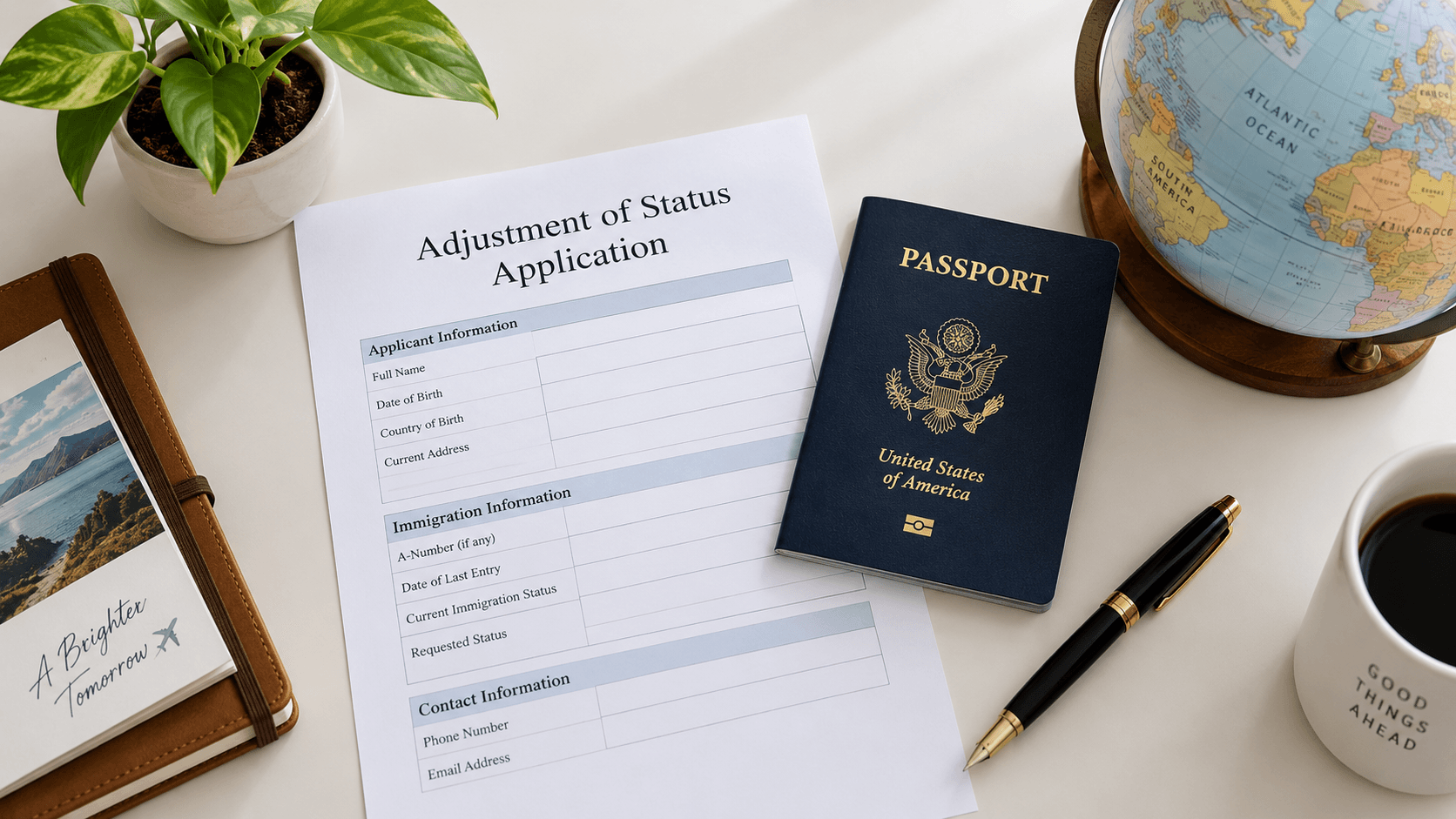
Most green card applicants have to pick one of two paths to get their visa. Here's what actually determines which one applies to you.
Once a green card petition is approved (or approvable) and a visa number is available, there are two distinct mechanical paths to actually becoming a permanent resident: adjustment of status, filed inside the U.S., or consular processing, completed at a U.S. embassy or consulate abroad. Which one applies to you is mostly determined by where you currently are and your immigration history, not by preference.
Adjustment of status, in short
If you're already lawfully present in the U.S. — commonly in valid nonimmigrant status such as F-1, H-1B, or a similar category — you may be eligible to file Form I-485 to adjust status without leaving the country. The process typically includes a biometrics appointment, work and travel authorization while the case is pending (Forms I-765 and I-131), and usually an interview at a USCIS field office.
Consular processing, in short
If you're outside the U.S., or you're in the U.S. but not eligible to adjust status, your case instead moves through the National Visa Center, which collects civil documents and fees, then schedules an interview at the relevant U.S. embassy or consulate in your home country (or another designated post). Approval there results in an immigrant visa stamped in your passport, which you use to enter the U.S. and become a permanent resident upon admission.
What actually determines eligibility to adjust
- Lawful status and maintenance of status. Generally you need to be in a valid nonimmigrant status (with some exceptions, particularly for immediate relatives of U.S. citizens, who have more flexibility under certain provisions).
- How you entered the U.S. Adjustment generally requires lawful entry; some categories of applicants who entered without inspection face additional hurdles or aren't eligible to adjust at all without a waiver.
- Category-specific rules. Some employment- and family-based categories have particular nuances about who can adjust versus who must consular process, independent of current location.
Practical tradeoffs beyond eligibility
- Travel during the process. Adjustment applicants generally need advance parole to travel internationally while their case is pending, without which leaving the U.S. can be treated as abandoning the application. Consular processing applicants, by contrast, are already abroad and don't face this issue in the same way.
- Work authorization timing. Adjustment applicants typically become eligible for interim work authorization while the green card case is pending; consular processing doesn't offer an equivalent interim benefit since the applicant isn't yet in the U.S.
- Interview location and logistics. A USCIS field office interview versus a consular interview abroad can mean very different travel, cost, and scheduling considerations depending on where you and your family currently are.
The bottom line
For most applicants, eligibility rules — not preference — determine which path is available, and many people don't actually have a real choice between the two. Where a genuine choice does exist (which happens in a subset of cases), the tradeoffs above around travel flexibility and work authorization timing are usually what should drive the decision, ideally discussed with an immigration attorney who can confirm eligibility for adjustment specifically in your case before you commit to a strategy.
More in Green Cards
 Green Cards
Employment-Based Green Cards, EB-1 Through EB-5 Explained
The five employment-based green card categories aren't ranked by how good they are — they're built for very different situations. Here's how they differ.
 Green Cards
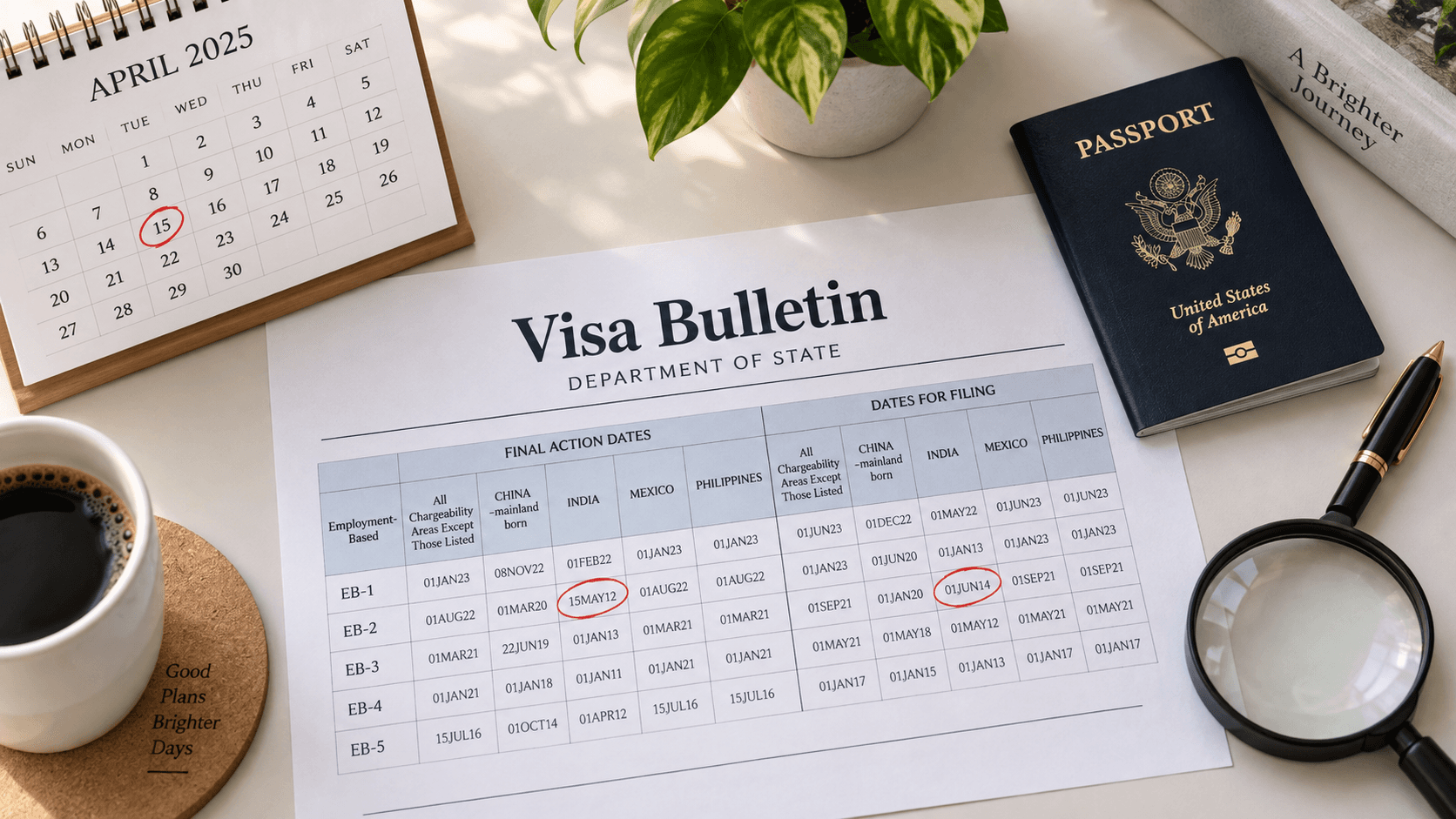
The Visa Bulletin and Priority Dates, Actually Explained
The Visa Bulletin is the single most confusing document in the green card process. Here's what priority dates and the two charts actually mean.