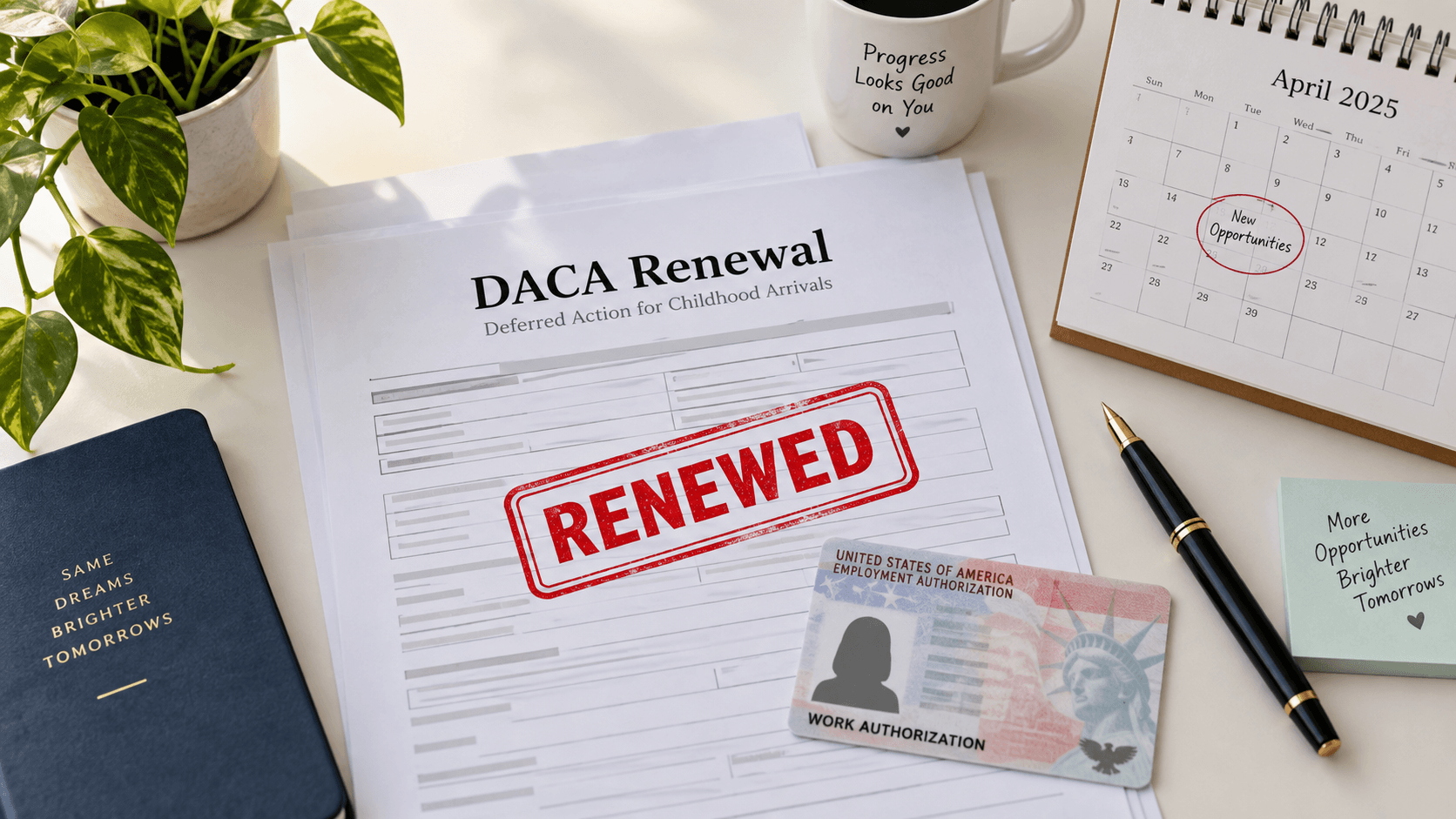
DACA doesn't renew itself. Missing a filing window can mean a lapse in work authorization — here's how to keep your renewal on track.
Deferred Action for Childhood Arrivals (DACA) grants qualifying recipients protection from deportation and eligibility for work authorization, typically in renewable two-year periods. Because DACA is a discretionary policy rather than a permanent legal status, and its availability has shifted with litigation and administration changes over the years, staying current on renewal is more important than with most other categories.
Start earlier than you think
USCIS has long recommended filing a renewal between 120 and 150 days before your current DACA and work permit expire. Processing times fluctuate, and a gap between your old authorization expiring and a new one being approved can disrupt your ability to legally work — so treat that 150-day mark as your real deadline, not a suggestion.
What you'll need
- Form I-821D, Consideration of Deferred Action for Childhood Arrivals
- Form I-765, Application for Employment Authorization, plus the I-765 worksheet
- Filing fees for both forms (fee amounts and any waiver eligibility should be confirmed on the current USCIS forms page, since they change)
- Updated documentation if anything has changed since your last renewal — a new address, a name change, or new removal proceedings, for example
Common reasons renewals get delayed
- Filing too close to the expiration date, leaving no buffer for standard processing
- Gaps in continuous residence that weren't previously an issue but come up on review
- New criminal history — even minor charges should be disclosed to an immigration attorney before filing, since certain offenses can affect eligibility
- Incomplete responses on the I-821D about travel, addresses, or employment history since the last renewal
If your DACA has already lapsed
If your work authorization has expired, you generally can't legally work until a new EAP is approved. Depending on your employer's policies, this can affect payroll status. File as soon as possible, and be prepared to have a conversation with HR about the situation — most employers who have handled DACA renewals before will have a process for this.
Because DACA's legal status has shifted
DACA has been the subject of ongoing litigation for years, and the rules around new applications versus renewals, work authorization validity periods, and even whether the program continues to accept any filings at all have changed multiple times. Anyone with DACA status should check USCIS's current guidance immediately before filing rather than relying on what was true even a year or two ago — this is one of the few immigration categories where "check today, not last year" genuinely matters.
A simple pre-filing checklist
- Confirm your current expiration date and mark 150 days before it
- Confirm current USCIS guidance on DACA renewals is still open to your situation
- Gather I-821D, I-765, and the I-765 worksheet
- Review your record since the last renewal for anything that needs disclosure
- File, keep the receipt notice, and track your case status online
Given how often DACA policy has shifted, this is a category where consulting an immigration attorney or an accredited nonprofit legal service — even just to confirm current eligibility — is worth the time.
More in Work Visas
 Work Visas
O-1 Visas for Extraordinary Ability: Who Actually Qualifies
The O-1 has no annual cap and no lottery, but 'extraordinary ability' is a genuinely high bar. Here's what the evidence actually needs to show.
 Work Visas
H-1B Visas Explained: Eligibility, the Cap, and How to Prepare
The H-1B is the main route into skilled U.S. employment for foreign professionals — and also the most competitive. Here's how the process actually works.