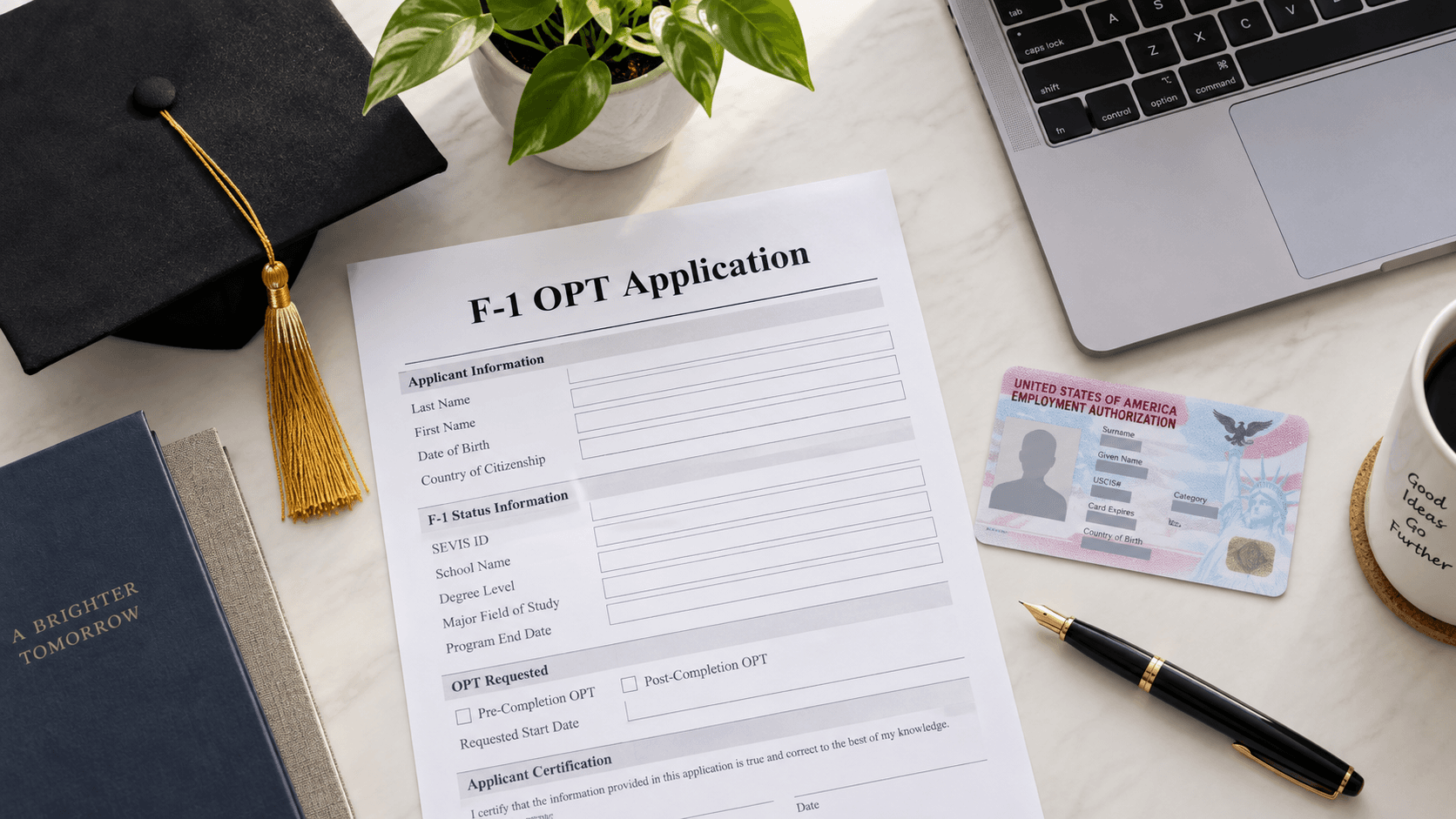
OPT and STEM OPT: How F-1 Students Extend Work Authorization
Optional Practical Training lets F-1 students work in the U.S. after graduation — and STEM graduates can extend it well beyond the standard 12 months.
Optional Practical Training (OPT) is what lets many F-1 international students work in the U.S. temporarily in a field related to their degree, either during their studies or, most commonly, right after graduating. For STEM graduates specifically, an extension can stretch that window considerably further.
Standard post-completion OPT
After finishing a degree, F-1 students can apply for up to 12 months of post-completion OPT, authorized through an Employment Authorization Document (EAD). The work has to be directly related to the student's field of study, and there's a required window for applying — generally starting 90 days before the program end date and no later than 60 days after it, so timing the application against your actual graduation date matters.
The STEM extension
Graduates with a qualifying STEM degree — and specific fields matter here, since the qualifying list is defined by a specific CIP code list maintained by the government — can apply for a 24-month extension on top of the standard 12 months, for up to 36 months of total OPT. To qualify, the employer must be enrolled in E-Verify, and the extension application must be filed before the initial 12-month OPT period expires.
The "cap-gap" connection
OPT matters a lot for students hoping to eventually work under H-1B status, because of how the H-1B cap-subject timeline interacts with OPT expiration. Students selected in the H-1B lottery whose OPT would otherwise expire before their new H-1B status begins can, in many cases, get a "cap-gap" extension bridging the two — but the rules for exactly when that applies are specific enough that checking current USCIS guidance for your situation, rather than assuming it automatically applies, matters here.
What can go wrong
- Filing outside the window. Applying too early or too late relative to the 90-day-before to 60-day-after rule is one of the most common avoidable OPT mistakes.
- Unemployment limits. OPT has a cap on how many total days a student can be unemployed while on OPT status (higher for STEM extensions than standard OPT) — exceeding it can jeopardize status.
- Jobs not related to the field of study. Both standard and STEM OPT require the work to connect to the degree; a role with no reasonable connection can be a compliance problem.
- STEM extension employer requirements. Employers must be enrolled in E-Verify and there are specific training plan documentation requirements (Form I-983) for the STEM extension that don't apply to standard OPT.
Practical timing advice
Because OPT authorization takes time to process and the filing window is fixed relative to your program end date — not flexible around your job search — most international students benefit from applying as early as the window allows rather than waiting until a job offer is finalized. OPT authorization isn't tied to having an offer in hand at the time you apply; the clock is about your academic timeline, not your job search timeline.