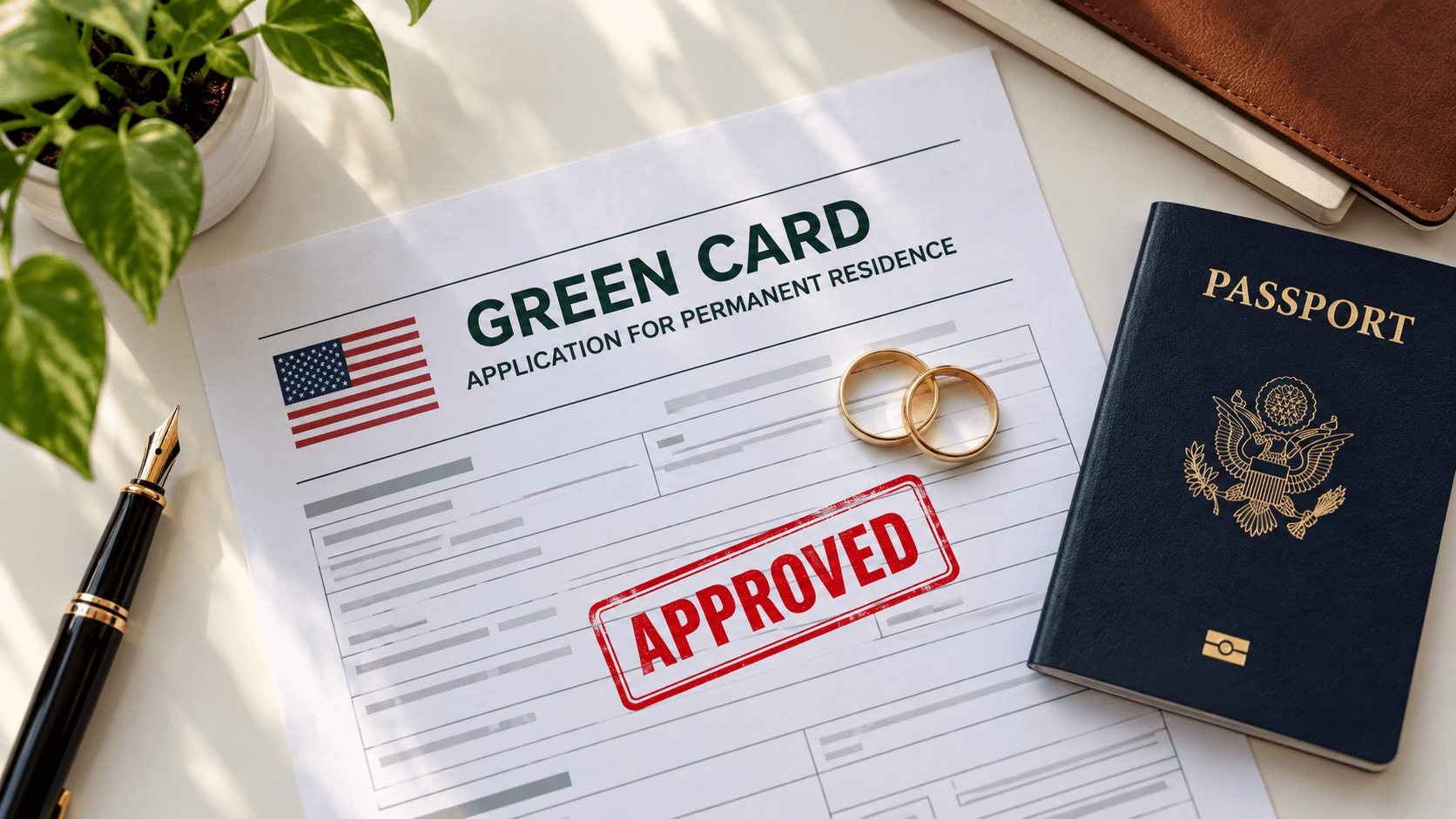
Spousal green cards move faster than most family categories, but the process still has real pitfalls — especially around evidence of a genuine marriage.
Marriage to a U.S. citizen or lawful permanent resident is one of the more straightforward paths to a green card, but "straightforward" doesn't mean simple — officers scrutinize spousal cases specifically because marriage fraud is a known avenue for immigration abuse, so the burden of proving a genuine relationship falls on the couple.
Two different paths depending on where you live
If the foreign spouse is already in the U.S. in valid status, the couple typically files to adjust status directly. If the foreign spouse is abroad, the case goes through consular processing instead, ending with an interview at a U.S. embassy or consulate. A third option — the K-1 fiancé(e) visa — exists specifically for couples who aren't yet married and want the foreign partner to enter the U.S. to marry within 90 days, after which they'd still file for adjustment of status separately.
Citizen spouse vs. green card holder spouse
If the sponsoring spouse is a U.S. citizen, the case falls under the "immediate relative" category with no annual cap, so there's no Visa Bulletin wait once the petition is approved. If the sponsoring spouse is a lawful permanent resident rather than a citizen, the case falls into a numerically limited preference category (F2A), which can mean a real wait even after approval — this distinction changes the realistic timeline substantially.
Building the evidence of a bona fide marriage
This is where most spousal cases succeed or struggle. Strong evidence typically includes:
- Joint financial accounts, leases, or mortgages
- Joint insurance policies naming each other
- Photos together over time, not just from the wedding
- Affidavits from friends and family who know the relationship firsthand
- Evidence of joint travel, shared correspondence, or cohabitation
Couples who married recently, or who have limited commingled finances for cultural or practical reasons, should lean harder on the qualitative evidence — photos, communications, and third-party affidavits — since financial commingling isn't the only valid signal of a genuine marriage.
Conditional residence for marriages under two years
If the marriage is less than two years old at the time the green card is approved, the resident spouse receives "conditional" permanent residence valid for two years rather than the standard ten. The couple must jointly file Form I-751 to remove those conditions before that two-year period ends, again submitting updated evidence that the marriage remains genuine (or qualifying for a waiver if the marriage has since ended, in cases of divorce or abuse).
The interview
Spousal interviews often include detailed questions about daily life — who does the cooking, what the bedroom looks like, how a typical morning goes. This isn't designed to trip anyone up; it's designed to distinguish couples who actually live a shared life from those who don't. In some cases, USCIS conducts the interview with both spouses together; in others, separately, comparing answers afterward.
Where cases commonly stall
- Insufficient commingled evidence for newer marriages
- Inconsistent answers between spouses in separate interviews
- Missing or expired documents at the I-751 stage, sometimes because couples assume the case is "done" after the initial green card is issued
Sponsoring a spouse is generally one of the faster family-based paths, but treating the evidence-gathering seriously from the start — rather than scrambling before the interview — is what actually keeps it fast.
More in Family Immigration
 Family Immigration
Sponsoring a Parent for a Green Card as a U.S. Citizen
Parents of U.S. citizens fall into the fastest family-based category — but only once the sponsoring child turns 21. Here's how the process works.
 Family Immigration
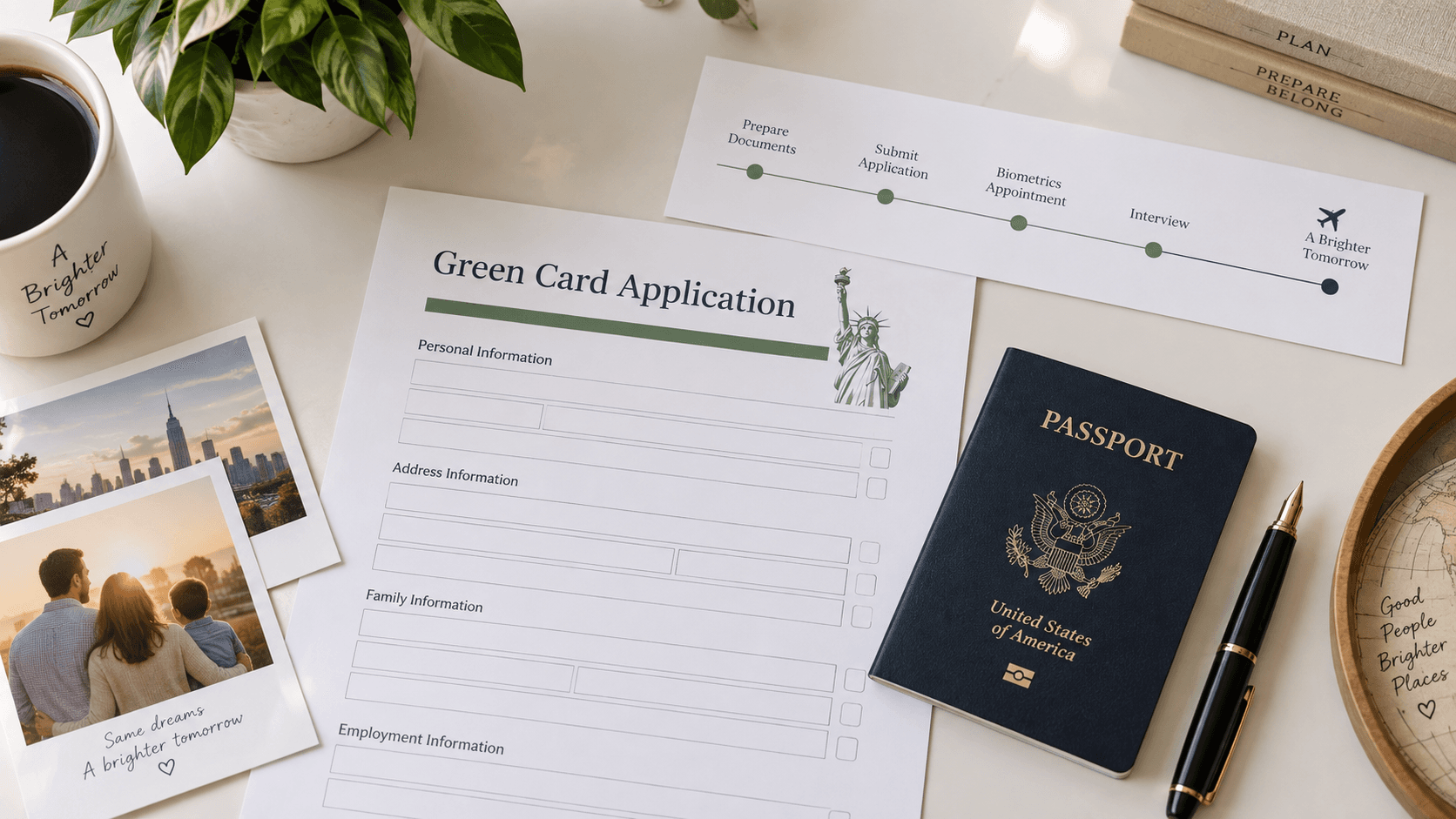
The Family-Based Green Card Timeline, Step by Step
Sponsoring a spouse, parent, or sibling for a green card involves several distinct stages. Here's what actually happens between the petition and the interview.