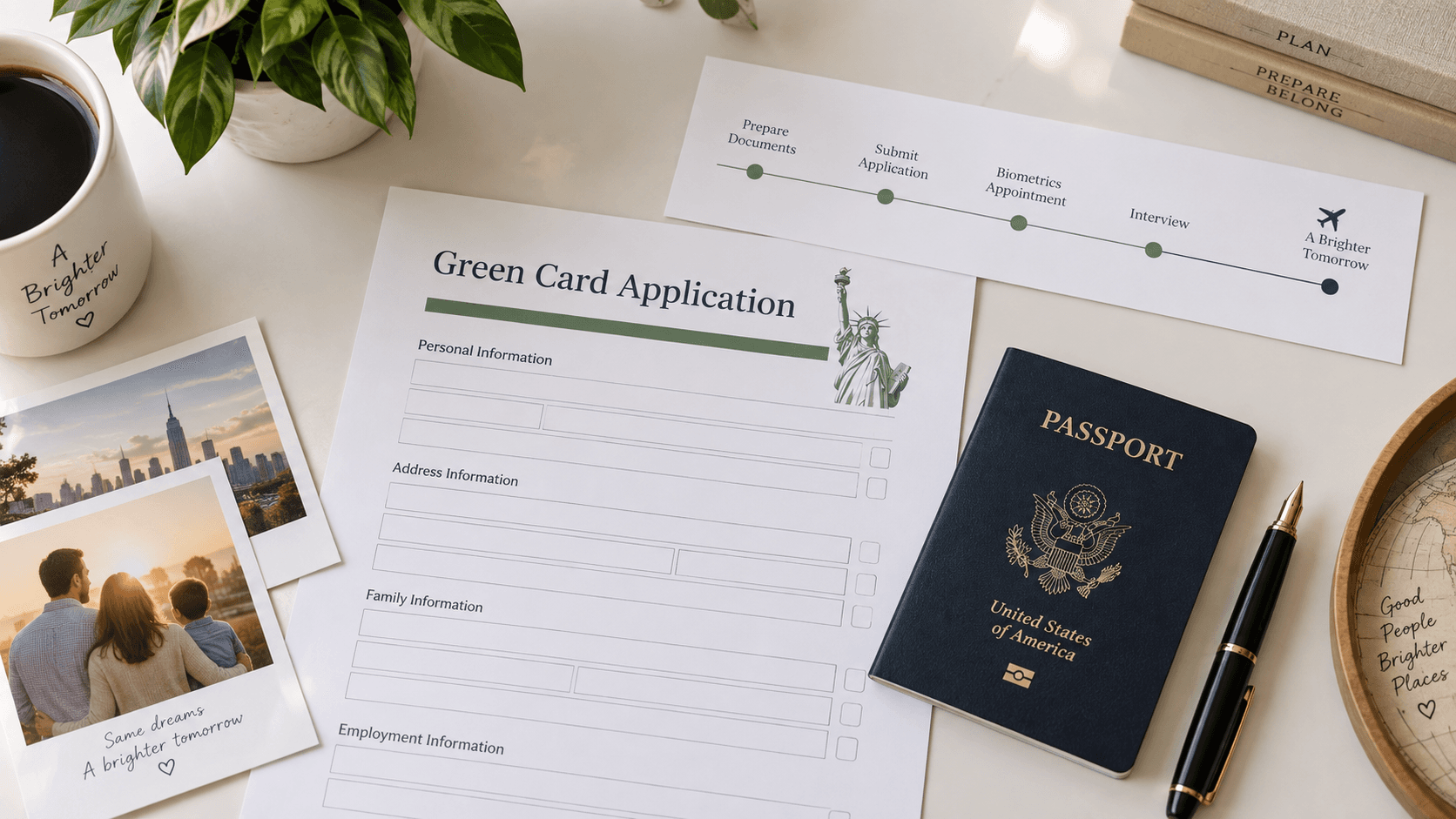
Sponsoring a spouse, parent, or sibling for a green card involves several distinct stages. Here's what actually happens between the petition and the interview.
Family-based immigration is the largest category of U.S. green cards, but the process looks different depending on your relationship to the sponsor and where you currently live. Understanding the stages helps you set realistic expectations instead of guessing at timelines from forum posts.
Step 1: The petition (Form I-130)
The U.S. citizen or lawful permanent resident sponsor files Form I-130, Petition for Alien Relative, establishing that a qualifying family relationship exists. This is a factual filing — it doesn't grant any status by itself, but it starts the clock and establishes your "priority date," which matters enormously for anyone outside the "immediate relative" category.
Step 2: Immediate relative vs. preference category
If you're the spouse, unmarried child under 21, or parent of a U.S. citizen, you're an "immediate relative" — there's no annual numerical cap, so you move to the next stage as soon as your petition is approved. Everyone else (adult children, siblings of citizens, and any relative of a green card holder rather than a citizen) falls into a "preference category" with an annual quota. Because demand from some countries exceeds the quota, your priority date has to become "current" on the monthly Visa Bulletin before you can proceed — for some categories and countries, this wait can run years.
Step 3: Adjustment of status or consular processing
If you're already lawfully in the U.S., you may be able to "adjust status" — filing Form I-485 to become a permanent resident without leaving the country. If you're abroad, the case instead goes through consular processing: the National Visa Center collects documents and fees, then schedules an interview at a U.S. embassy or consulate in your home country.
Step 4: Biometrics and supporting evidence
Whichever path you're on, expect a biometrics appointment (photos and fingerprints) and requests for supporting evidence — proof of the relationship, financial support documentation from the sponsor (Form I-864, Affidavit of Support), and a medical exam from an approved physician.
Step 5: The interview
Nearly every family-based case ends with an interview, either at a USCIS field office (adjustment of status) or a consulate abroad. Officers are checking that the relationship is genuine and that all the paperwork lines up. For spousal cases in particular, be ready for detailed questions about daily life together — this is standard, not a sign something's wrong.
What can slow things down
- Missing or inconsistent documentation between the I-130 and I-485/consular filings
- A sponsor's income falling short of the Affidavit of Support threshold, requiring a joint sponsor
- Preference categories with backlogged priority dates, which is a quota issue rather than anything USCIS can expedite
- Background and security checks, which run on their own timeline
Because backlogs vary so much by category and country of origin, checking the current Visa Bulletin for your specific category is far more useful than any general timeline estimate — including this one.
More in Family Immigration
 Family Immigration
Sponsoring a Parent for a Green Card as a U.S. Citizen
Parents of U.S. citizens fall into the fastest family-based category — but only once the sponsoring child turns 21. Here's how the process works.
 Family Immigration
How to Sponsor a Spouse for a Green Card
Spousal green cards move faster than most family categories, but the process still has real pitfalls — especially around evidence of a genuine marriage.