Most immigration delays aren't caused by complicated legal issues — they're caused by avoidable paperwork mistakes. Here are the ones that come up again and again.
Across almost every immigration category, the same handful of avoidable mistakes account for a disproportionate share of delays and Requests for Evidence (RFEs). None of these require a law degree to avoid — they just require care.
1. Inconsistent information across forms
If your address, employment dates, or family details are listed differently on two related forms, expect a follow-up request. Before filing anything, cross-check every new form against everything you've previously submitted for the same case.
2. Missing signatures or outdated form versions
USCIS periodically updates its forms, and filing an outdated edition is a common, entirely avoidable rejection reason. Always download the current version directly from the official USCIS forms page immediately before filing rather than reusing a saved copy from months earlier.
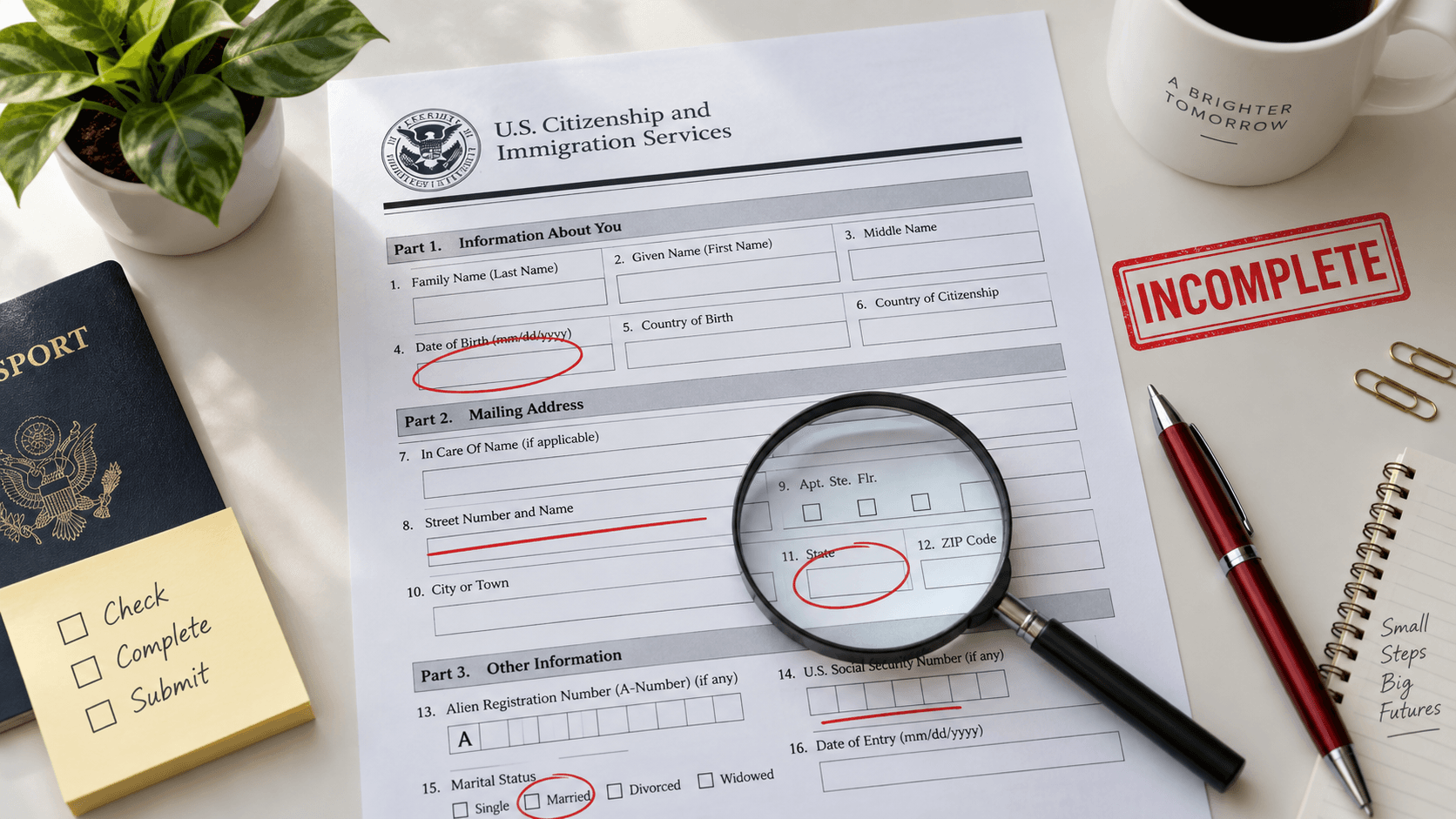
3. Incomplete answers instead of "N/A" or "None"
Leaving a field blank can read as an oversight rather than a genuine "not applicable," sometimes triggering a request for clarification. Explicitly write "N/A" or "None" where a question doesn't apply to you.
4. Insufficient translation of foreign-language documents
Any document not in English generally needs a certified English translation, including a translator's certification of accuracy. Partial translations, or translations without the required certification statement, are a frequent source of RFEs.
5. Underestimating the Affidavit of Support threshold
For family-based cases, sponsors need to show income meeting a threshold tied to the federal poverty guidelines for their household size — and this number updates annually. Sponsors who check an old figure, or who don't account for household size correctly, can end up needing a joint sponsor they didn't plan for.
6. Passport or document validity gaps
A passport that expires soon, or a supporting document nearing its own expiration, can complicate visa stamping and travel even after approval. Check expiration dates against your expected timeline, not just against today's date.
7. Assuming a case is finished after the "approval" step
Several categories have a follow-up requirement most people don't expect — removing conditions on a two-year marriage-based green card (I-751), for example, or renewing DACA well before expiration. Treat approval as a checkpoint, not necessarily the finish line.
8. Not updating USCIS on a change of address
By law, most noncitizens are required to notify USCIS of an address change within 10 days using Form AR-11, separate from updating the address on any pending case. Missing this is a common, low-effort compliance gap.
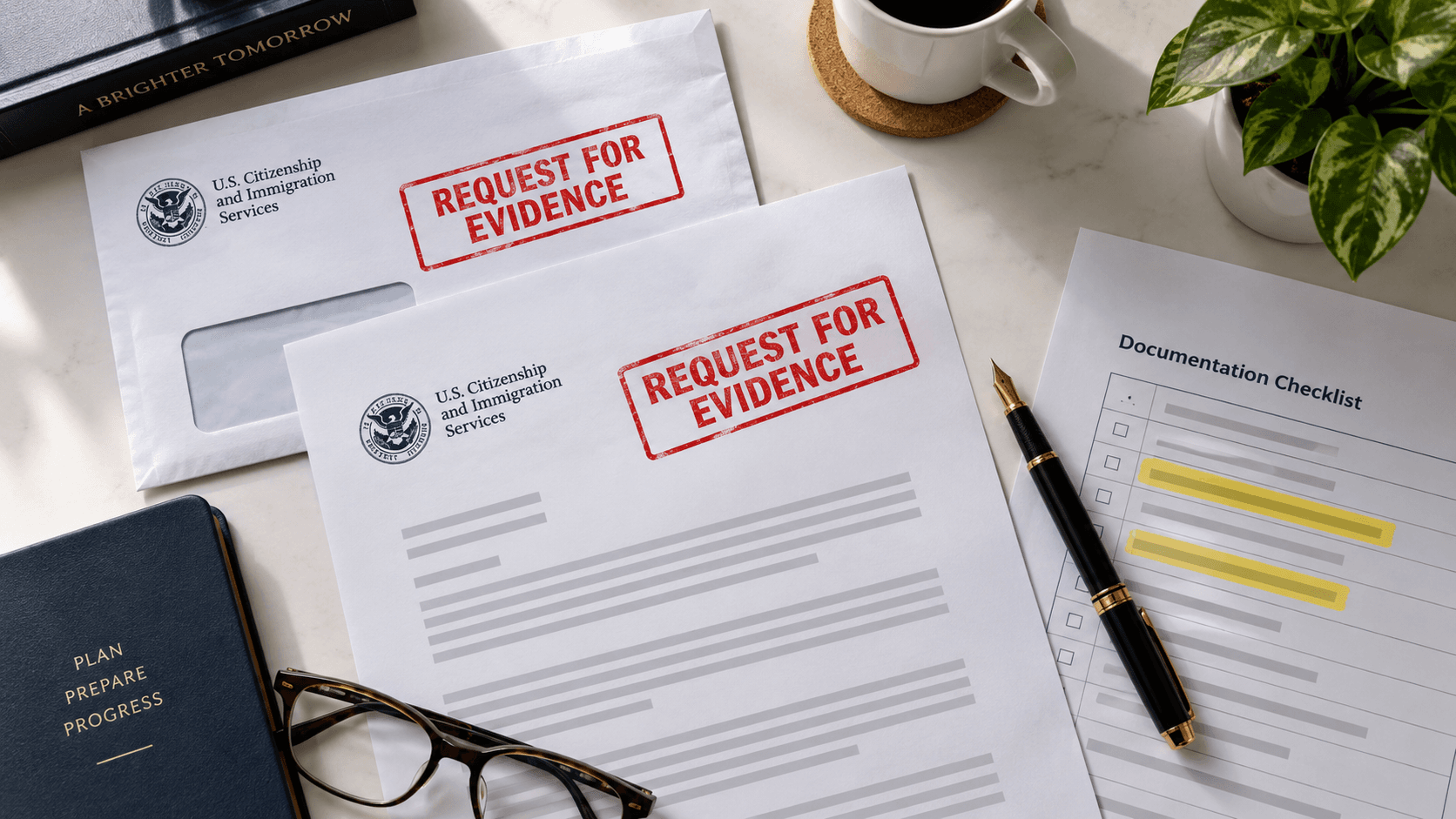
9. Responding late — or incompletely — to an RFE
A Request for Evidence has a hard deadline, and missing it can result in a denial based on the record as it stood. When responding, address every point raised specifically; partial responses often generate a second round of questions instead of a decision.
10. Traveling internationally at the wrong moment
Leaving the U.S. while certain applications are pending — particularly adjustment of status without advance parole — can be treated as abandoning the application entirely. Before booking any international travel while a case is pending, confirm whether your specific filing requires advance parole or otherwise restricts travel.
The common thread
Almost none of these mistakes are about the underlying legal eligibility — they're about process discipline: current forms, consistent answers, complete documentation, and attention to deadlines. Building a simple checklist before every filing, and re-reading it against the current USCIS instructions each time rather than from memory, eliminates most of this list on its own.