An RFE isn't necessarily a bad sign, but it does mean your deadline just got a lot more urgent. Here's what causes them and how to respond well.
A Request for Evidence (RFE) is USCIS asking for more documentation or clarification before it can decide your case. It's not the same as a denial, and it doesn't necessarily mean something is wrong — but it does come with a firm deadline, and how you respond matters a lot.
Common triggers
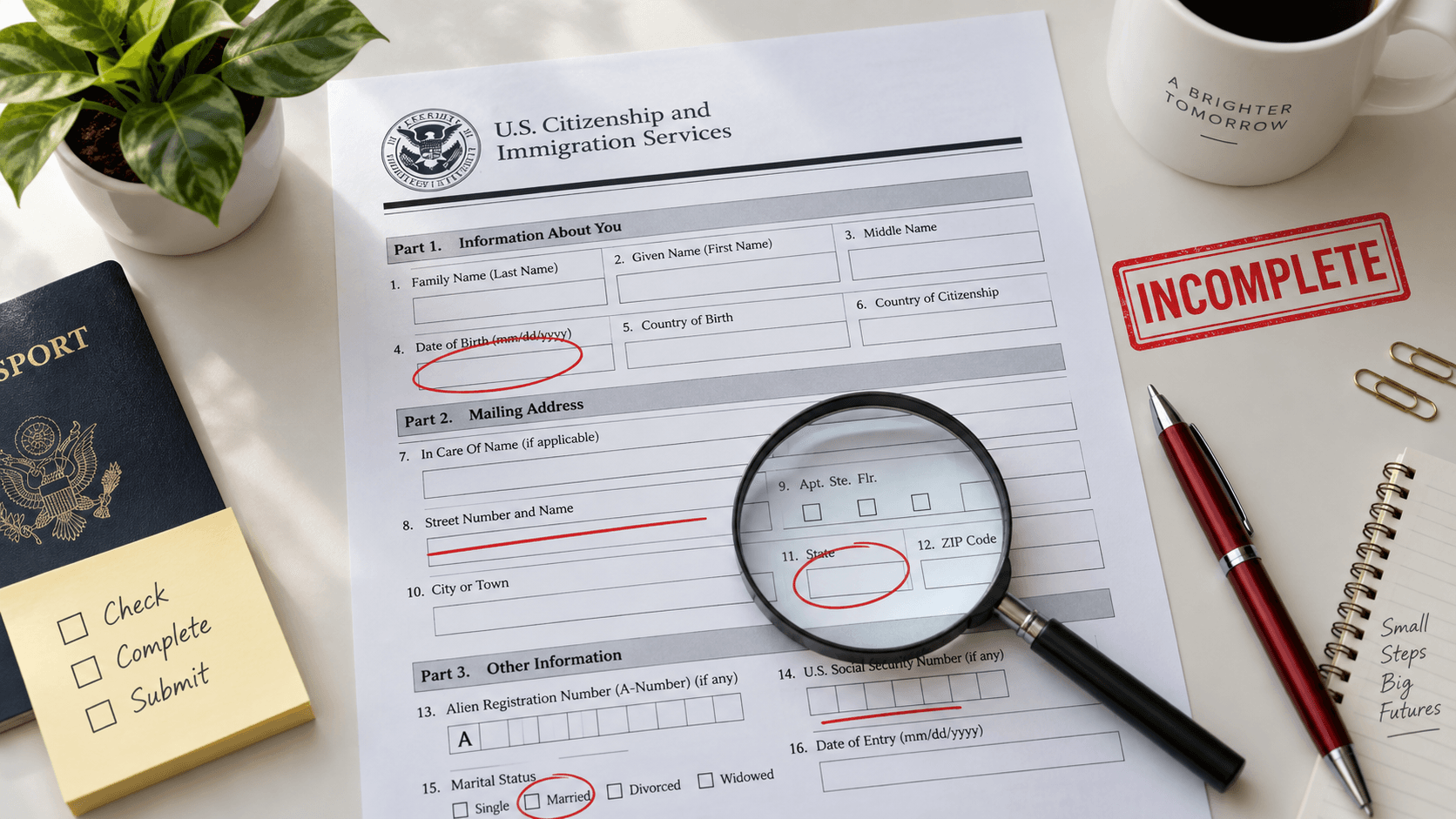
- Incomplete initial evidence. Filing without every required supporting document is one of the most frequent RFE causes — a case that looked "basically done" to the applicant but was missing something USCIS considers required.
- Inconsistencies across the case. Dates, addresses, or names that don't match between forms, supporting letters, or prior filings routinely prompt a request for clarification.
- Ambiguous eligibility evidence. For employment-based cases, this often means evidence that doesn't clearly establish the job requires the claimed specialty knowledge, or that the beneficiary's credentials clearly match it.
- Missing translations or certifications. A foreign-language document submitted without a certified English translation is a specific, very avoidable RFE trigger.
- Financial sufficiency questions. In family-based cases, an Affidavit of Support that doesn't clearly establish the sponsor meets the income threshold for their household size often prompts a request for a joint sponsor or additional financial evidence.
What an RFE actually looks like
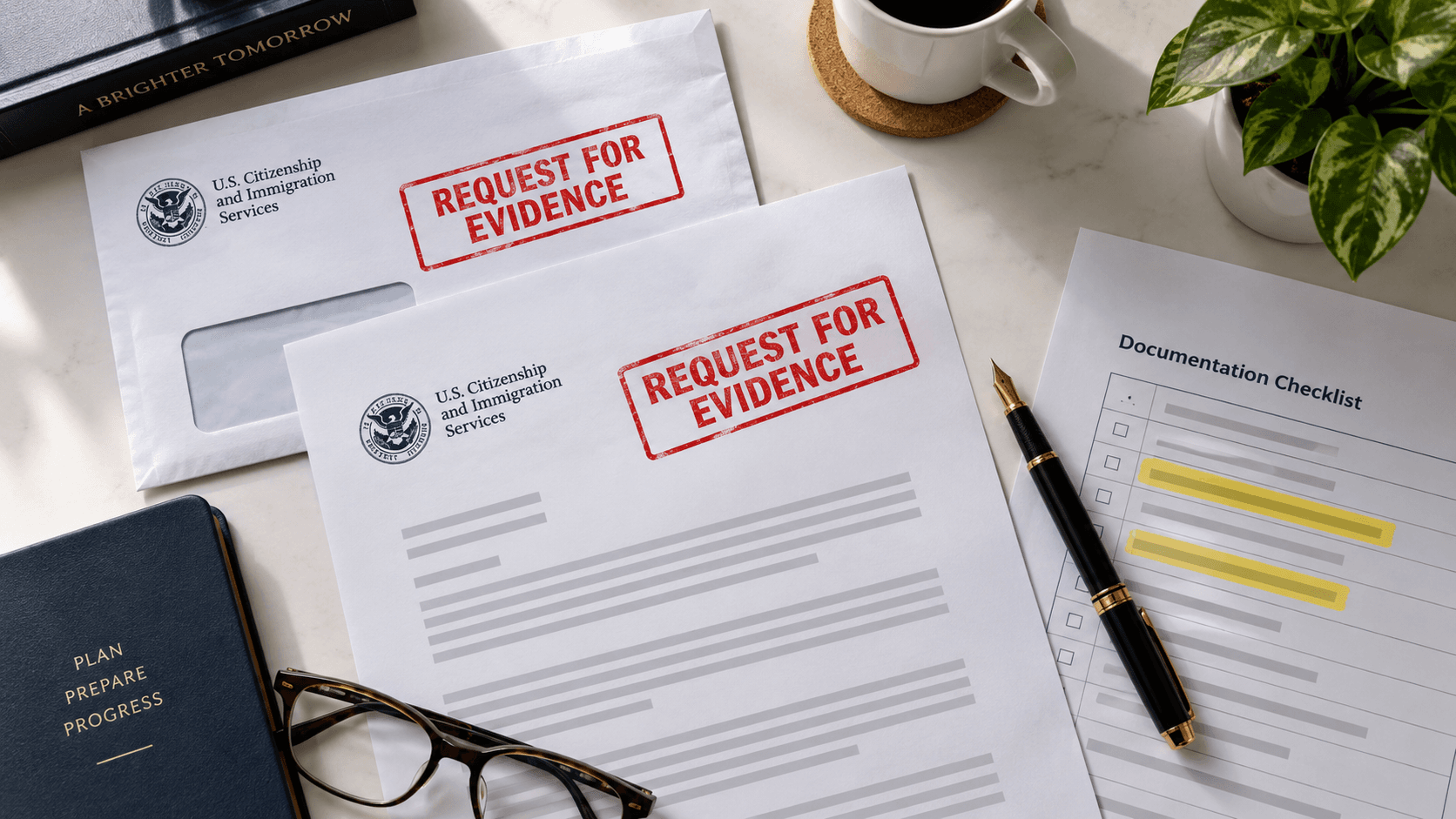
It's a formal letter listing, often item by item, exactly what USCIS wants to see and why. It's worth reading closely rather than skimming — vague responses to a specific, itemized request are a common reason a second RFE (or a denial) follows a first one.
How to respond well
- Address every point raised, explicitly. If the RFE lists three concerns, the response should visibly address all three, not just the one that seems easiest.
- Don't miss the deadline. RFEs come with a hard response window, and missing it typically means USCIS decides the case on the record as it already stands — usually resulting in a denial.
- Submit a complete package, not a piecemeal one. Include a cover letter mapping each new piece of evidence to the specific RFE item it addresses; this makes it easier for the reviewing officer to confirm nothing was missed.
- Get help if the RFE is substantive rather than clerical. A request asking for a missing translation is very different from one questioning whether your job duties actually meet a legal standard — the second kind often benefits from an attorney's involvement.
What an RFE doesn't mean
Receiving an RFE is common enough across many categories that it shouldn't be read as a signal the case is doomed. Many cases that receive an RFE are ultimately approved once the requested evidence is provided. The real risk isn't getting an RFE — it's responding late, incompletely, or without addressing exactly what was asked.